51 Manuscripts From Tantra Vidyā Pīṭham In Aluva, India, Are Now Available In Reading Room
Collections News
51 manuscripts from Tantra Vidyā Pīṭham in Aluva, India, are now available in Reading Room
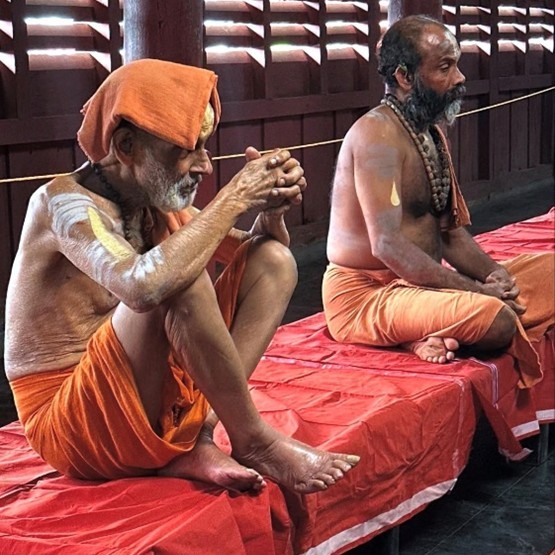
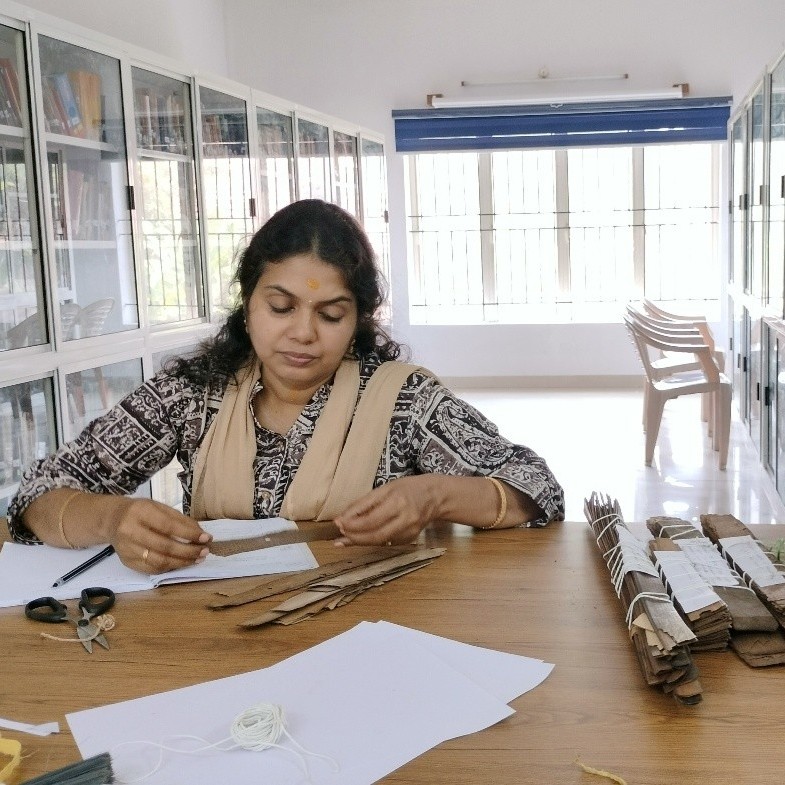
Posted: 2026-04-23The Tantra Vidyā Pīṭham collection (DKA 005), comprising 51 palm-leaf manuscripts, has been digitized and fully cataloged under the DiPiKA Project (Digital Preservation of Kerala Archives) and is now accessible through HMML’s Reading Room. Tantra Vidyā Pīṭham is a residential educational institution dedicated to training students in the ritual practices of Kerala temple worship, with the aim of preparing them to serve as temple priests. It was founded in 1972 by P. Madhavji, a spiritual and social reformer. The institution was initially located in Thirunavaya, later moved to Chowannur, and is now based in Aluva.
The school maintains a library situated on the banks of the Periyar River, housing a valuable collection of both modern publications and palm-leaf manuscripts. Notably, the collection also includes manuscripts that belonged in the past to the renowned Payyūr Bhaṭṭa family of Porkulam, known for their contributions to Mīmāṃsā scholarship. Evidence of the provenance of some manuscripts is preserved in their marginalia, which contain ownership statements such as payyūrppaṭṭerīṭe grantham (Malayalam), meaning “the manuscript of Payyūr Paṭṭeri (Payyūr Bhaṭṭatiri)”. Approximately half of the Porkulam collection was acquired by the Government Oriental Manuscript Library (Chennai) in the early 20th century, while the remaining portion is now preserved in the Tantra Vidyā Pīṭham in Aluva.
The family marked itself in the history of Sanskrit literature in Kerala, as its numerous members were notable scholars and poets. In the 15th century, they were settled to the east of Porkulam (Sanskritised form: Raṇakhala, c. 26 miles from Thrissur), in a village known as Velaṅgāḍ or Vedāraṇya. It is possible to trace and reconstruct detailed information on at least six generations of scholars, beginning around the 14th century.
The collection includes several important works on Mīmāṃsā, one of the six schools of orthodox Hindu philosophy, concerned with the interpretation of Vedic texts for the observance of Vedic ritual. One highlight (DKA 005 00030) is the text known as Vijayā by Anantanārāyaṇa (c. 14th–15th century); it is a commentary on Paritoṣa Miśra's Ajitā, which is itself a commentary on Kumārila Bhaṭṭa’s Tantravārttika, edited so far only on the basis of paper transcripts. The collection also contains several copies of the Kāśikāṭīkā by Sucaritamiśra (c. 10th century); a commentary on Kumārila Bhaṭṭa's Ślokavārttika that has been only partly published; and several works by Payyūr authors. The collection preserves an unpublished Advaita Vedānta work (DKA 005 00009): Trayyantabhāvadīpikā by Rāmānanda Tīrtha (c. 17th century), which is a commentary on Ṛjuvivaraṇa.
In addition to these texts, the collection contains archival material in the form of a curuṇa (DKA 005 00049), which is a bundle of loose leaves tied together with a string. The leaves in a curuṇa are prepared differently from those used for manuscripts: in the case of manuscripts, the midrib is removed, whereas in curuṇas it is retained, and the leaves are folded along it to form a double layer. This curuṇa contains land records, partly written in the Vaṭṭeḻuttŭ script. View now
Share:
Recent Collections News:
Metadata for 338 manuscripts from StiftsMuseum Xanten in Xanten, Germany, is now available in Reading Room
169 Armenian manuscripts from the Pontificio Collegio Armeno in Rome, Italy, are now available in Reading Room