
Plants In The Margins Of Medieval Books
Plants in the Margins of Medieval Books
This story is part of an ongoing series of editorials in which HMML curators and catalogers examine how specific themes appear across HMML’s digital collections. From the Western European collection, Dr. Jennifer Carnell has this story about Plants.
What do you first picture when you think of an illuminated medieval European manuscript? You might imagine a large, decorated letter (an initial), a scene or portrait related to the text, and the swoops and curls of plants along the border of a page. This layout is so typically medieval to modern imaginations that it is reproduced in many depictions of these manuscripts today, whether in movies, children’s books, or even video games.
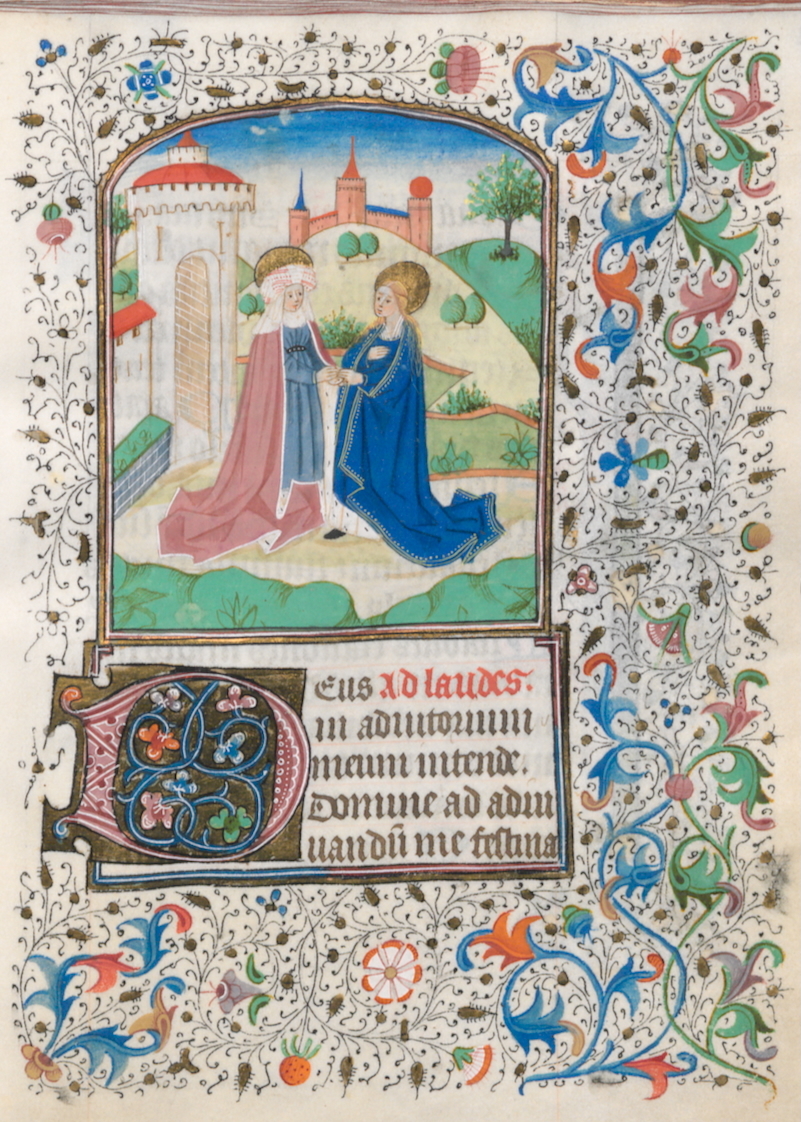
Actually, most medieval European manuscripts were not elaborately decorated. Heavily-used books, like manuals and study aids, did not require anything fancy. Decoration involved additional skill and labor, making it expensive.
Those who could afford a little decoration would have it in the form of plants, which were a relatively easy decoration to add. Based on what we find in surviving manuscripts, the minimum decoration offered was likely some sort of vegetation decorating the initial—perhaps even providing a short border—on the manuscript’s first page. And interestingly, when a prized book was heavily decorated, plants were almost guaranteed to be included. In this way, plants form the foundation for illustrations in medieval European books.
Today, plants are so expected in the decoration of these manuscripts that they can be overlooked and taken for granted. As borders to a picture or text, they seem to serve merely as a frame to the subject. But the stems, leaves, and flowers sprouting off medieval pages deserve some attention of their own. Here are three examples in the collection of Universitätsbibliothek Freiburg im Breisgau in Germany:
-
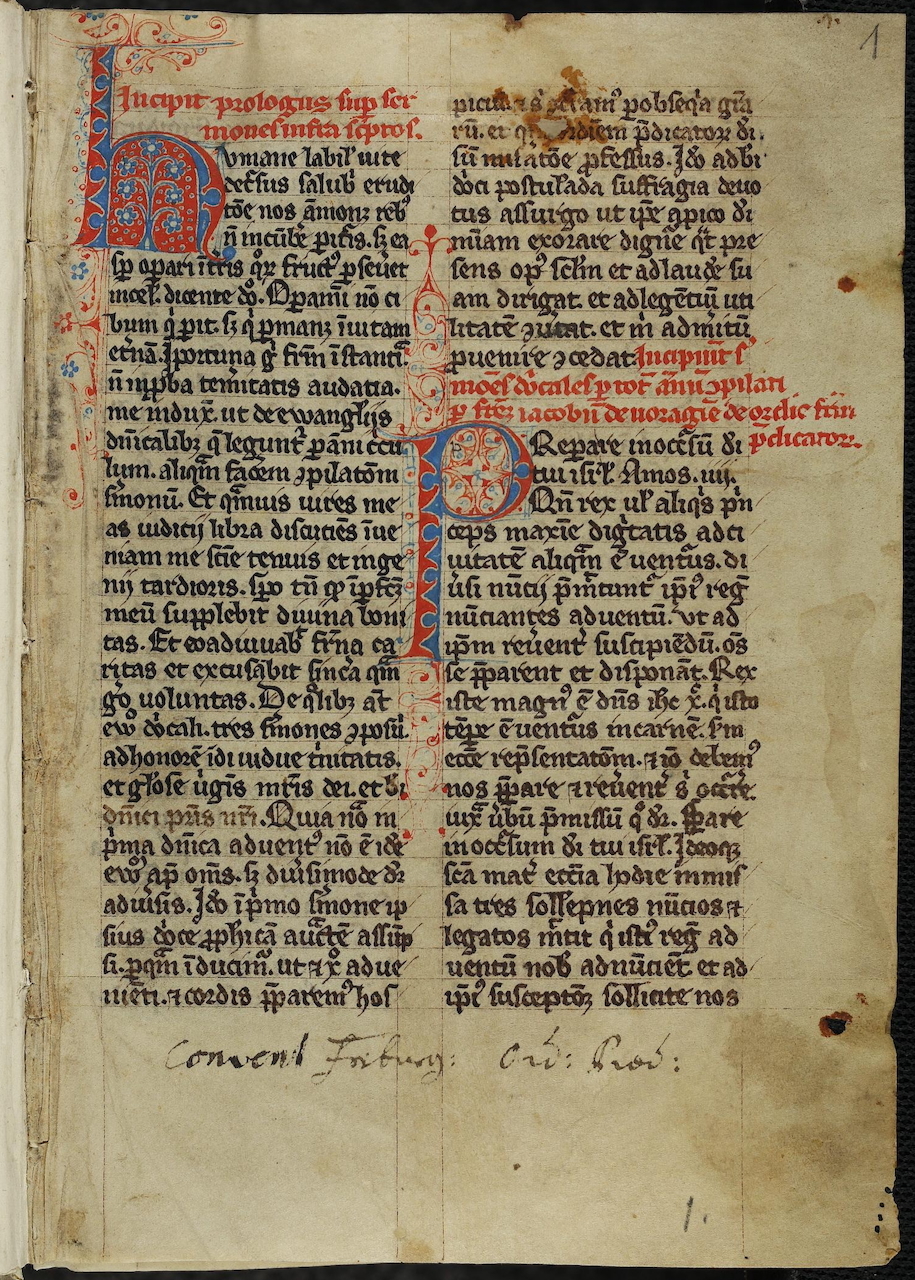
HMML 43184
Less-ornate manuscripts often alternated red and blue initials to organize sections of text. This manuscript is a collection of sermons from the early 14th century, and it elaborates on this convention by adding ivy tendrils and stylized blossoms. The manuscript and image are in the collection of Universitätsbibliothek Freiburg im Breisgau, Germany (Hs. 276, fol. 1r); public domain. (HMML 43184)
-
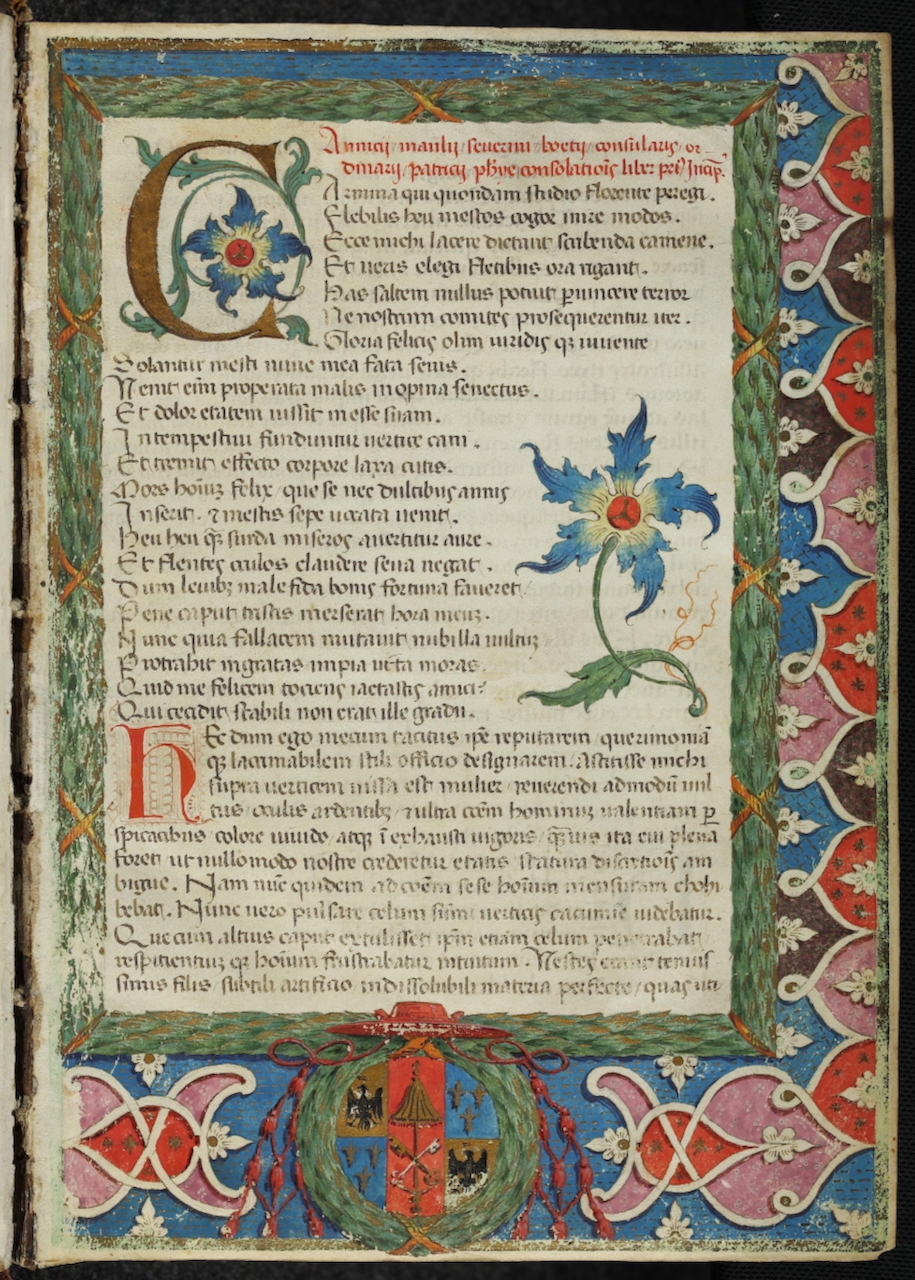
HMML 43255
This manuscript was copied in 1429 at the San Giovanni fortress in Kotor, Montenegro. Only a few years prior, the area had fallen under Venetian rule. Emphasizing victory, the laurel border encircles the text and the coat of arms of the Venetian family Este, topped with a cardinal’s hat. The manuscript and image are in the collection of Universitätsbibliothek Freiburg im Breisgau (Hs. 373, fol. 1r); public domain. (HMML 43255)
-
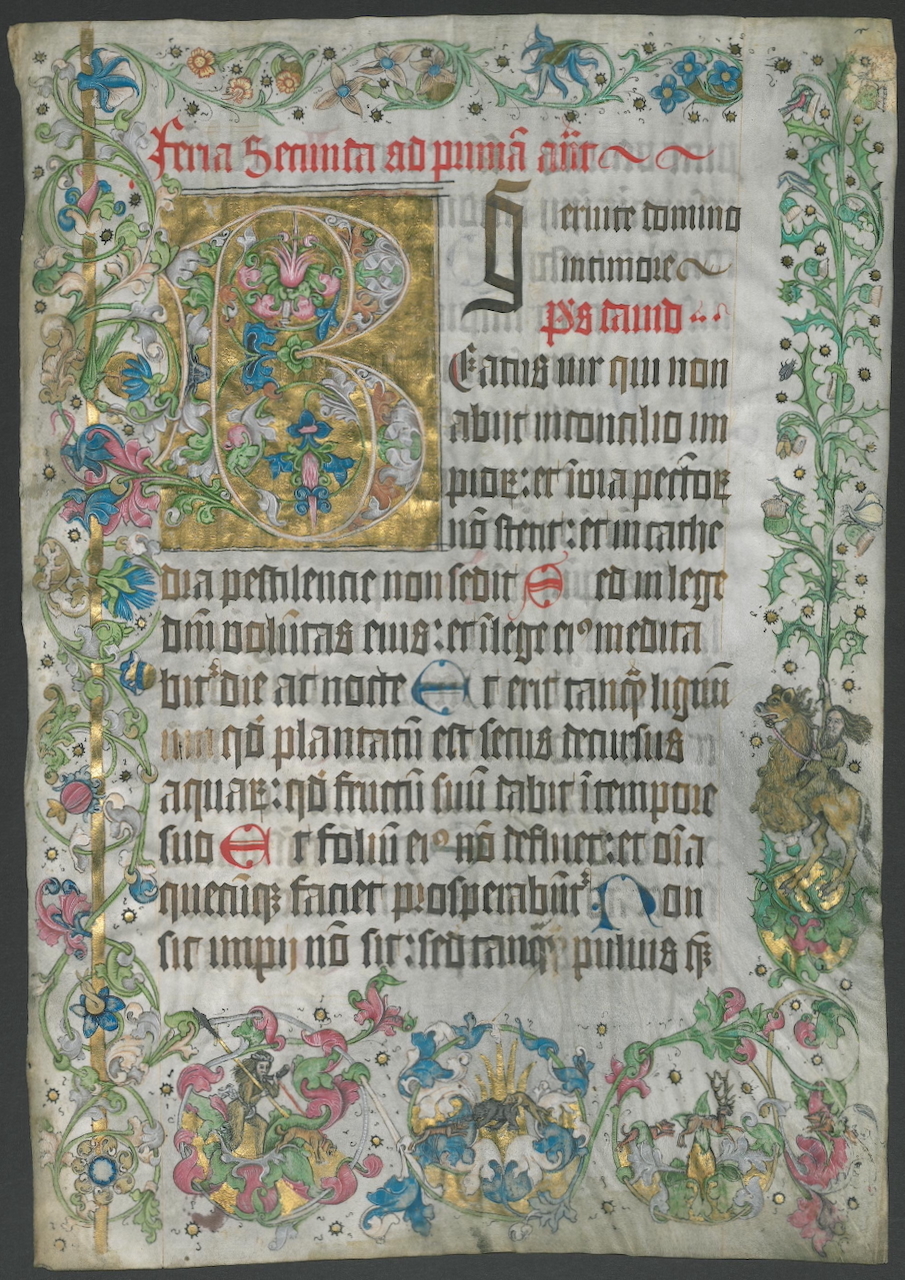
HMML 43424 013
Only one leaf from this psalter from 1450–1500 survives, perhaps thanks to its delicate beauty. Many species of plants are identifiable here—including acanthus leaves, speedwell, and thistles—and entwine around a scene of wild men and dogs hunting a stag. The manuscript and image are in the collection of Universitätsbibliothek Freiburg im Breisgau (Hs. 1270, fol. 1r); public domain. (HMML 43424 013)
Although such plants are a common motif, medieval viewers would have hardly considered them commonplace. As Europe’s population dramatically increased after the year 1000, more land was repurposed for farming to support the population, leading to intense deforestation by the 13th century.
The forests that remained were often maintained for hunting by the nobility or to support monasteries. Monastery gardens, in addition to growing food, were also sites for private contemplation and the cultivation of medicinal plants. The walled gardens of the nobility provided noblewomen with a private space outdoors and were a sign of wealth and status. Plants fringing the borders of many medieval texts evoke this elite and exclusive space of the garden, just as the expensive decorations themselves signify wealth and status, as in these three examples:
-
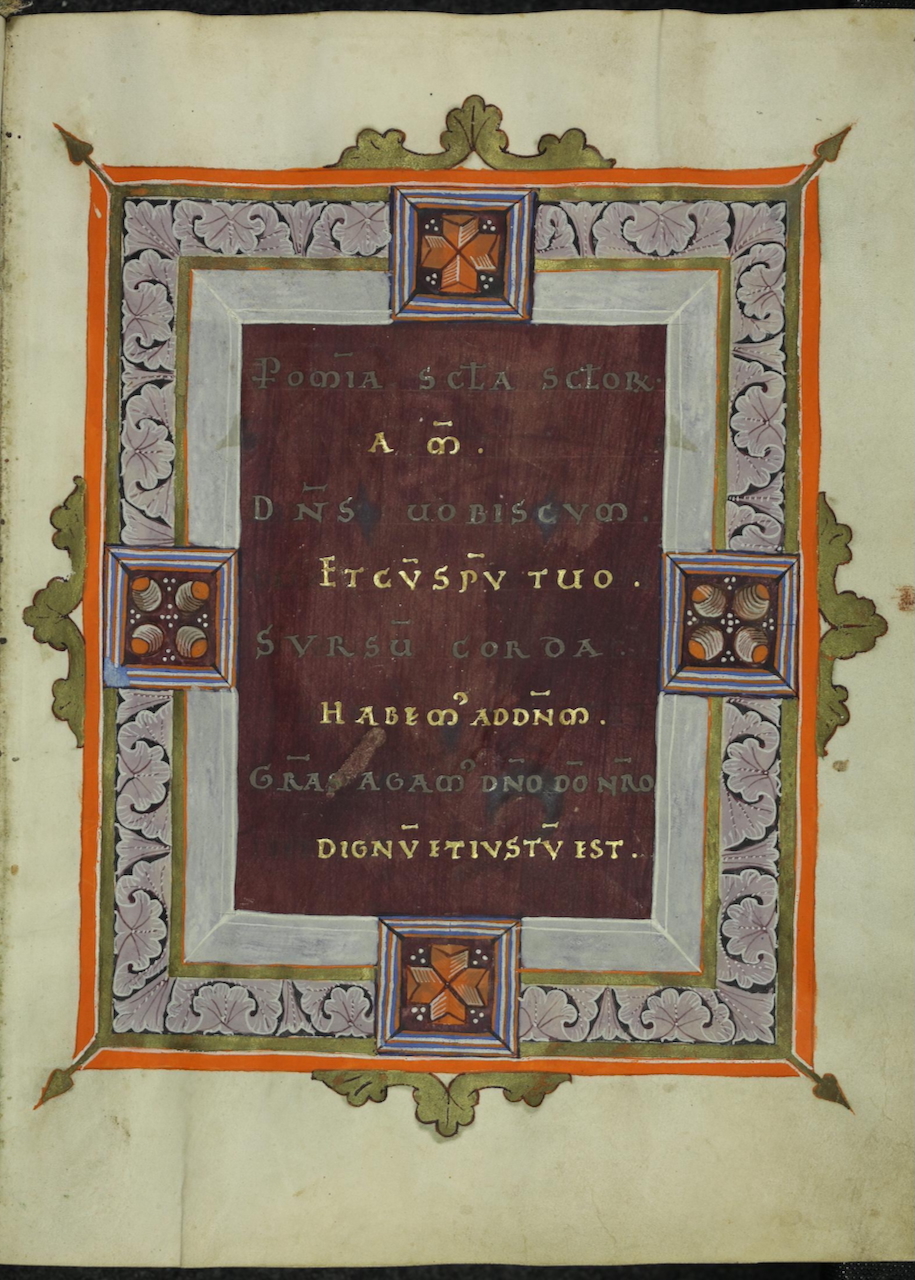
HMML 43241
This 11th-century sacramentary was likely created in Cologne. The artwork is a blend of Ottonian and Byzantine styles, which often used geometric and architectural motifs. Here, acorns and acanthus leaves frame the opening to the sacramentary. The manuscript and image are in the collection of Universitätsbibliothek Freiburg im Breisgau (Hs. 360a, fol. 14r); public domain. (HMML 43241)
-
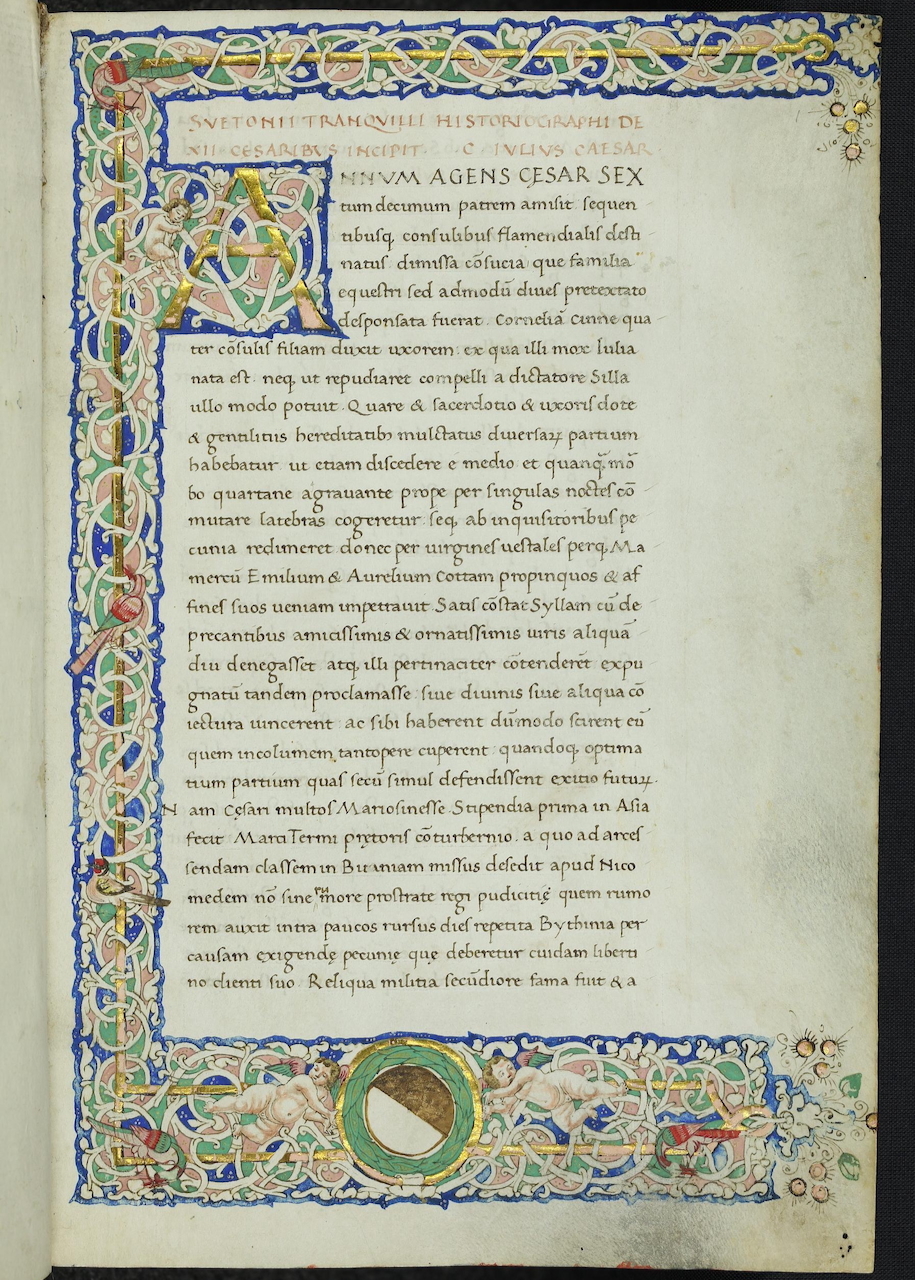
HMML 43254
White vine stems are typical of manuscripts from the Humanist tradition, as can be seen in this biography of Caesar by Suetonius, which was copied in the second half of the 15th century in Italy. The manuscript and image are in the collection of Universitätsbibliothek Freiburg im Breisgau (Hs. 372, fol. 1r); public domain. (HMML 43254)
-
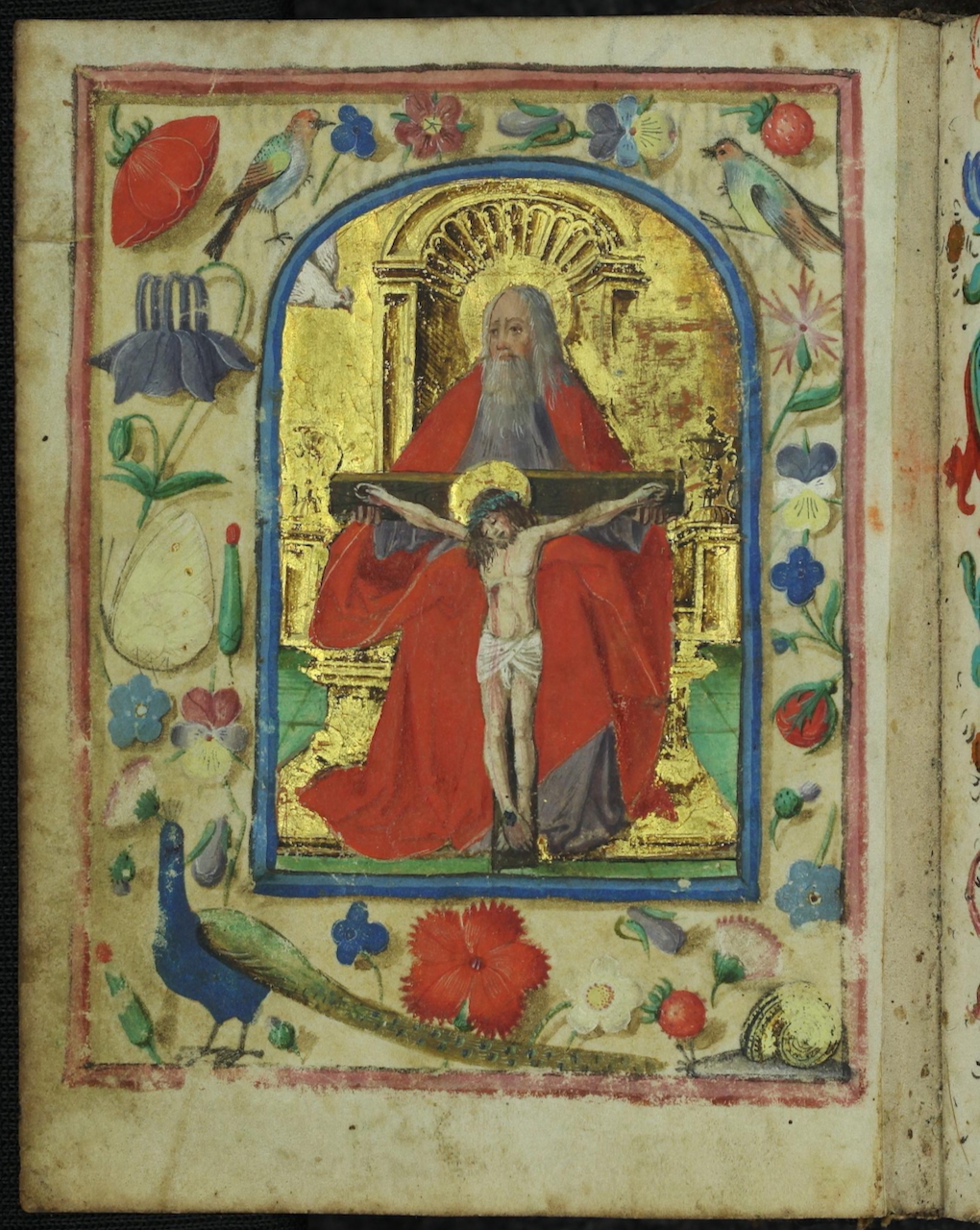
HMML 43129
A woman commissioned this book of hours in southwest Germany in 1504. Rather than being intertwined in vines and leaves, the flora and fauna in this manuscript are arranged in a proto-naturalistic style. But the elements are still heavily symbolic: the dianthus flower represents Christ’s wounds, the rose stands for the blood shed by Christ, the strawberry can indicate the Virgin Mary or the Trinity. The manuscript and image are in the collection of Universitätsbibliothek Freiburg im Breisgau (Hs. 213, fol. 12v); public domain. (HMML 43129)
For the average person, plants were grown for their practical uses and, in areas that had been heavily cleared, flourished mainly in designated places. Peasants might have small garden plots in addition to commonly shared fields, with coppices providing a ready supply of firewood. Still, the plants illustrated in medieval manuscripts would have found ways to grow in the margins of human life—perhaps as ivy crawling up walls or as wild strawberries on the edge of a forest. Maybe it is not surprising, then, that these plants would be found in the margins of books as well.