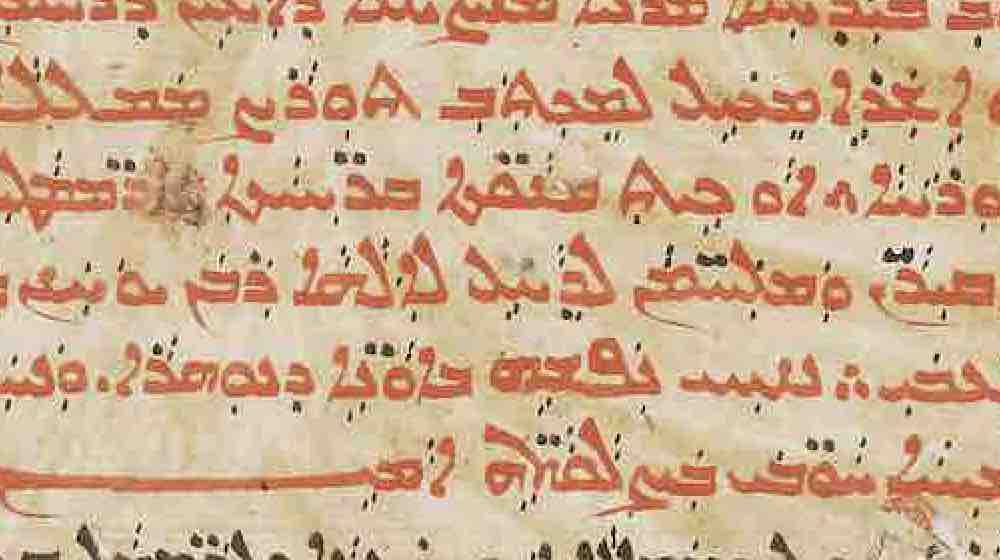
Cannabis In Islamicate Literature And Culture
Cannabis in Islamicate Literature and Culture
This story is part of an ongoing series of editorials in which HMML curators and catalogers examine how specific themes appear across HMML’s digital collections. From the Islamic collection, Dr. Josh Mugler has this story about Plants.
The legalization of cannabis is a hot topic in the contemporary political life of the United States and other countries. It is not a new topic, however. Cannabis has been known as a medicinal and mind-altering substance for many centuries, including in the Islamic world.
Cannabis usage was already a topic of discussion among Muslim legal scholars several centuries before the arrival of tobacco from the Americas. It was seen as an alternative to alcoholic drinks yet also similar to alcohol for its intoxicating effects.
As in English, languages like Arabic, Persian, and Turkish saw a proliferation of different terms for the substance. One of the most common, ḥashīsh, can mean “weed,” “herb,” or “grass”—broader concepts that, as in the English, became slang for cannabis. More scientifically-minded Islamicate texts may use a term like qinnab or qunnab, a direct cognate to the Latin scientific name Cannabis.
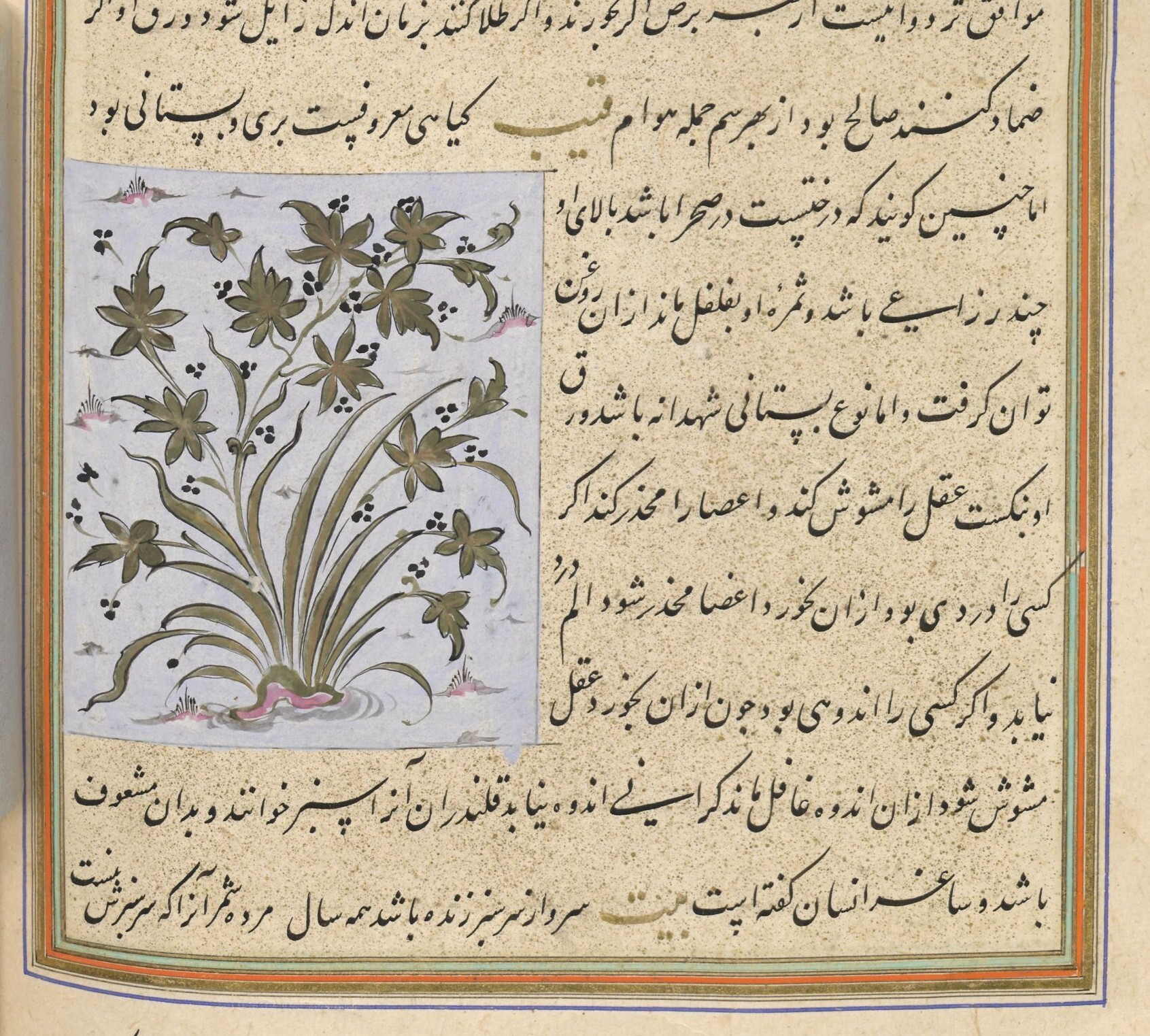
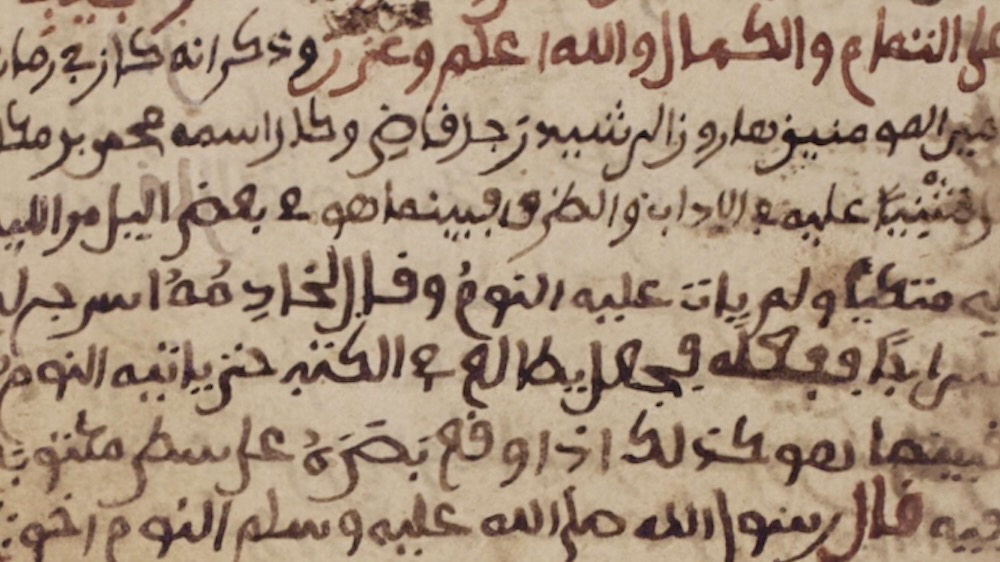
Many Muslim legal scholars saw cannabis and alcohol as parallel substances in terms of their intoxicating effects and therefore advocated that cannabis, like alcohol, be forbidden in Islam. One of the earliest Arabic legal texts devoted specifically to the topic of cannabis is Zahr al-ʻarīsh fī taḥrīm al-ḥashīsh (The flower on the trellis, on the prohibition of cannabis), by the Egyptian scholar Muḥammad al-Zarkashī (d. 1392 CE). HMML digitized a manuscript (USJ 2 00913) of this text that was copied in 1453 CE, likely in Hebron (known in Arabic as al-Khalīl) in Palestine.
Although alcohol is generally prohibited by Islamic legal discourses, its use has always been common within certain sectors of Islamic societies. Cannabis is no different.
The radical and secretive sect known as the Assassins (Ḥashshāshūn, in Arabic) were founded in the late 11th century. They allegedly received their name from their practice of using ḥashīsh to prepare themselves psychologically before carrying out violent attacks on political leaders. English receives its word “assassination” from the legendary exploits of this group.
In the 12th and 13th centuries, cannabis usage became more widespread, especially among the more experimental Sufi groups, who used it to induce states of spiritual euphoria in their devotional practices. Eventually cannabis was so well known that it became a topic for poetry, though it never achieved the poetic prominence and prestige of wine, always a favorite topic for Muslim poets.
By the 16th century, cannabis was prominent enough that several poets took it up as a personified character in dialogue poems known as “boasting contests” (munāẓarah or mufākharah, in Arabic). In these poems, cannabis and wine argue back and forth, each presenting the reasons why it is the superior psychoactive substance. The most famous of such boasting contests is also one of the most renowned examples of early Azerbaijani Turkish literature: Beng ü bâde (Weed and wine), by the Iraqi poet Fuzûlî (d. 1556). Two manuscript copies of this poem were digitized by HMML and can be viewed online in Reading Room (KAT 00013 and HMML microfilm 22756 002).
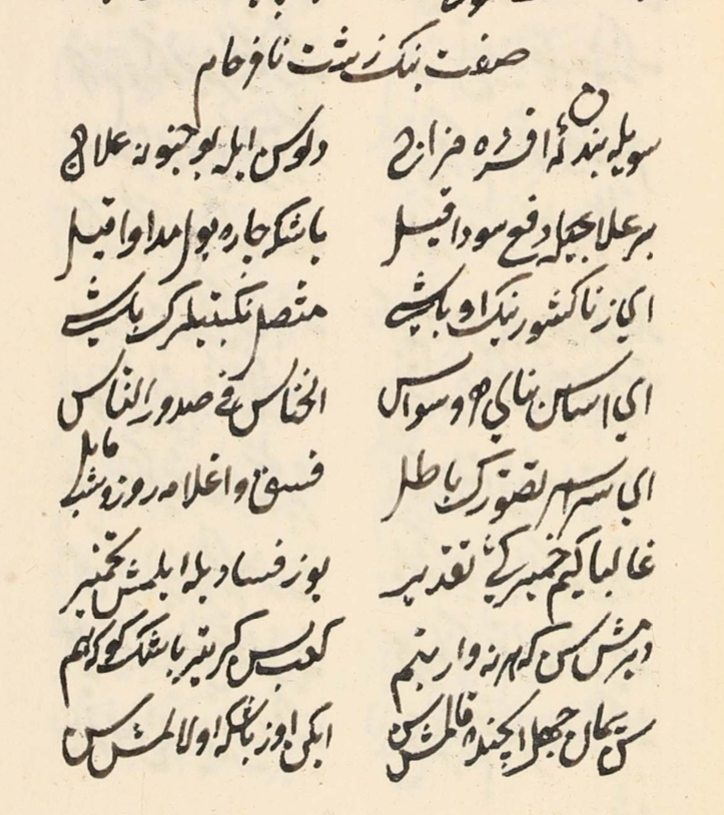
The potential deeper meaning(s) of Fuzûlî’s boasting contest have been hotly debated by scholars. Some believe that the character Wine represents Shah Ismāʻīl I of Iran (r. 1501–1524 CE) and Weed represents Ottoman Sultan Bayezid II (r. 1481–1512 CE). Wine is seen as an ally of this-worldly power, a central element of the luxurious lifestyle of societal elites, while Weed is a potential path to transcendent religious experience and thus to a higher world, even as it too brings serious dangers to its users. In any case, the two boasters end up in a destructive conflict that has little in the way of a clear resolution.
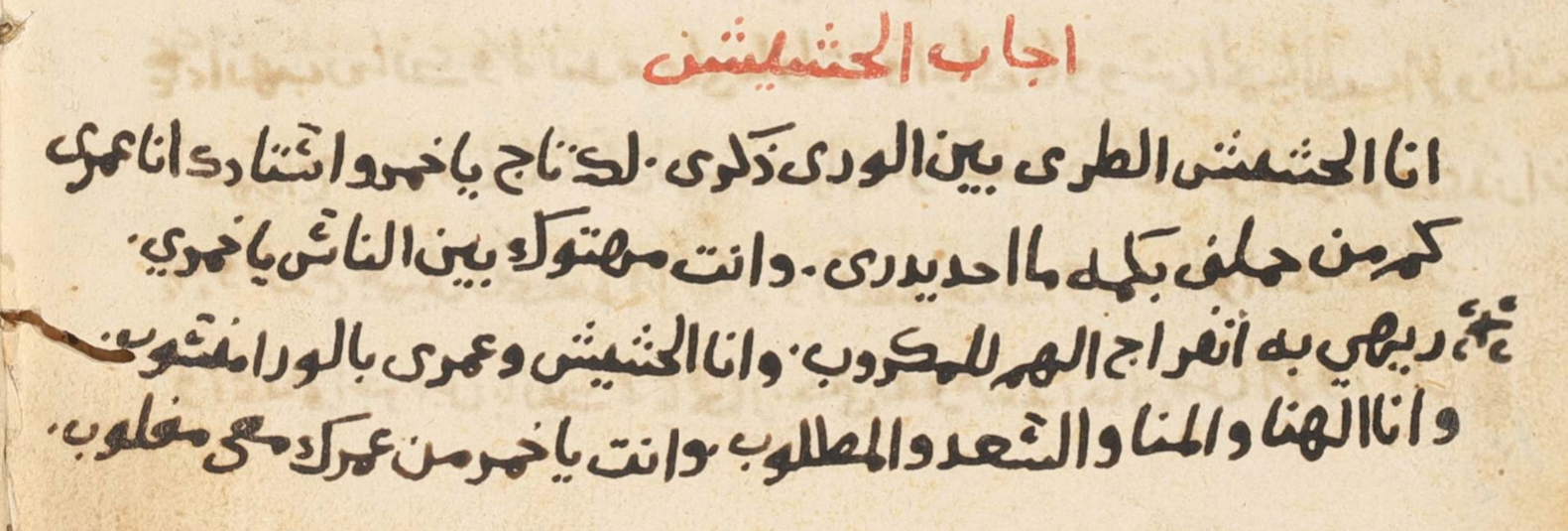
This genre is not limited to Muslim authors alone. HMML has also digitized two manuscript copies of a similar debate poem in Arabic, by a Christian poet named Yūḥannā ibn Ḥasan. In addition to his poem on wine and cannabis, Yūḥannā wrote another debate poem in which the rose asserts its superiority over the other flowers. Apart from these two poems, nothing else is known about Yūḥannā, but he probably lived around the same time as Fuzûlî, in the 16th century. The earliest known copy of his poems (in USJ 00678) comes from 1566 CE.
In Yūḥannā’s poem, although Wine eventually has the final word, Cannabis asserts:
I am happiness, destiny, prosperity, demanded;
and you, O Wine—upon your life—are by me defeated!