Illustrating Costume Of The Order Of Saint John Of Jerusalem In The 18th Century
Illustrating Costume of the Order of Saint John of Jerusalem in the 18th-Century
This story is part of an ongoing series of editorials in which HMML curators and catalogers examine how specific themes appear across HMML’s digital collections. From the Malta collection, Dr. Daniel K. Gullo has this story about Textiles.
In 1714, Hippolyte Hélyot began publishing his monumental eight volume history of European religious orders, the L'Histoire des ordres monastiques, religieux et militaires, et des congregations séculières de l'un et de l'autre sexe, qui ont été établis jusqu'à présent (The History of the Religious and Military Monastic Orders, and of the Secular Congregations of both Sexes, which have been established up to the Present Day). Hélyot’s history was a product of the Enlightenment’s desire to provide encyclopedic knowledge about a subject and make this knowledge readily accessible to the public.
Yet his work was more than a narrative history of known religious orders; he also commissioned an extensive series of engravings illustrating the history of costume worn by men and women for each religious order, including the Order of Saint John of Jerusalem. As a military religious order that included both men and women, the Order of Saint John had a remarkable array of attire. Hélyot’s history includes an impressive set of more than 20 costume engravings of the knights, chaplains, and sisters of the Order of Saint John, detailing the history of the Order’s religious clothing.
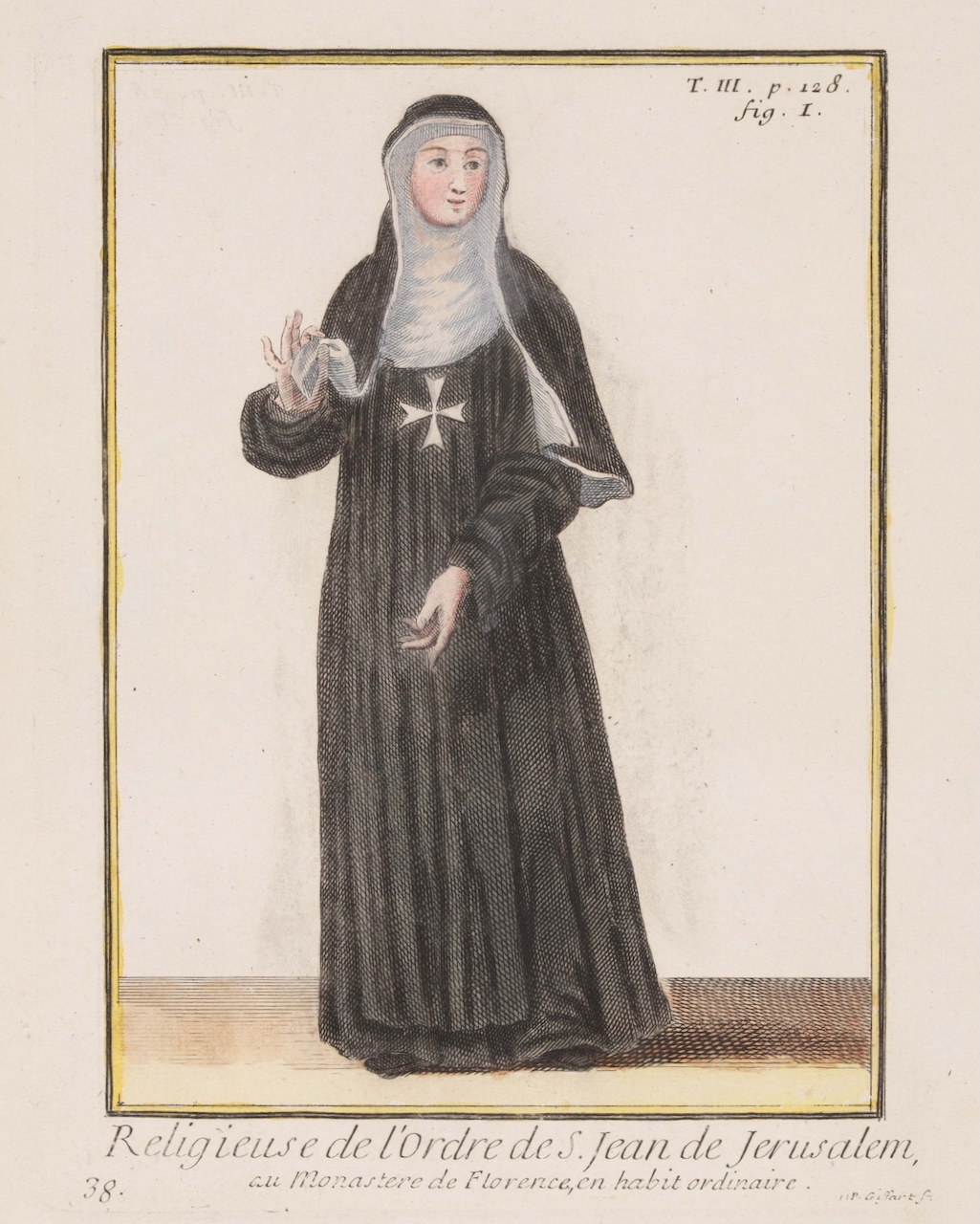
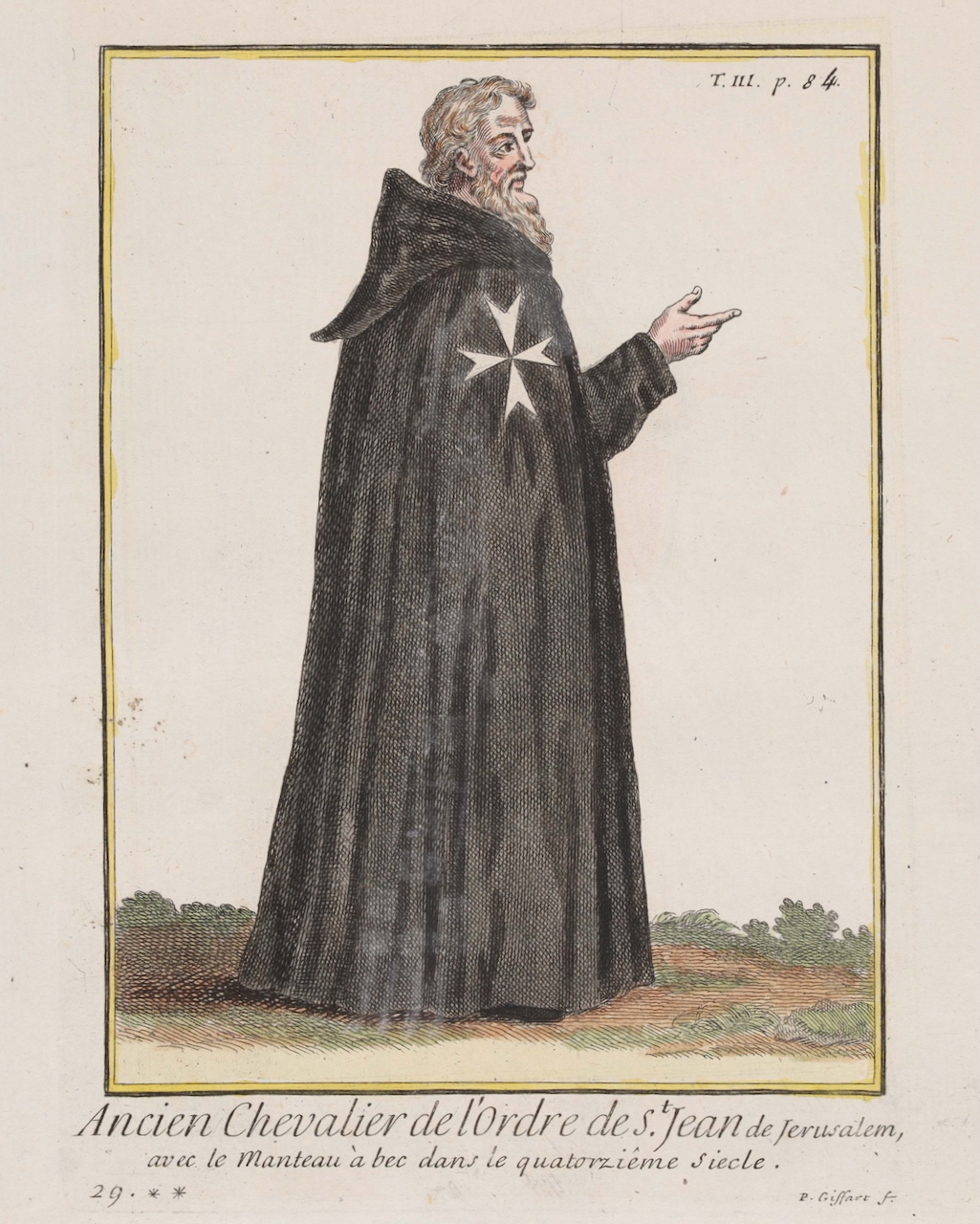
Helyot’s decision to extensively illustrate the historical and contemporary costumes of the Order of Saint John is not surprising. The Order’s varied membership (Grand Masters, Priors, Bailiffs, Knights, Pages, Chaplains, Sergeants of arms, and Sisters) and military ranks (Commanders, Captains, Colonels, Generals, and Admirals) produced a remarkable array of attire befitting a society that put pride and privilege of station into the sumptuary rules that governed behavior. Such public display of position in society was especially vested in the Order of Saint John as a military religious order, governed as much by the principals of nobility and rank as well as by its religious status.
Military costume figured prominently in the evolution of the Order’s uniforms as they responded the professionalization of military command structures and tactics in European armies and navies. A letter from July 6, 1753, is a window into this transition. Fra Pons-François de Rosset de Fleury (1727–1774), a knight from the Langue of Provence, wrote to Malta from Paris documenting the Order’s need to update their naval military uniforms to accord with the evolution of European practices. His letter included several illustrations for the new uniforms and a cost analysis to procure each design for the officers of the navy of the Order of Saint John. The use of red to denote the navy—as opposed to the white of the army and blue of the engineers—stands out against the gold brocade that exhibits the prestige of the rank.
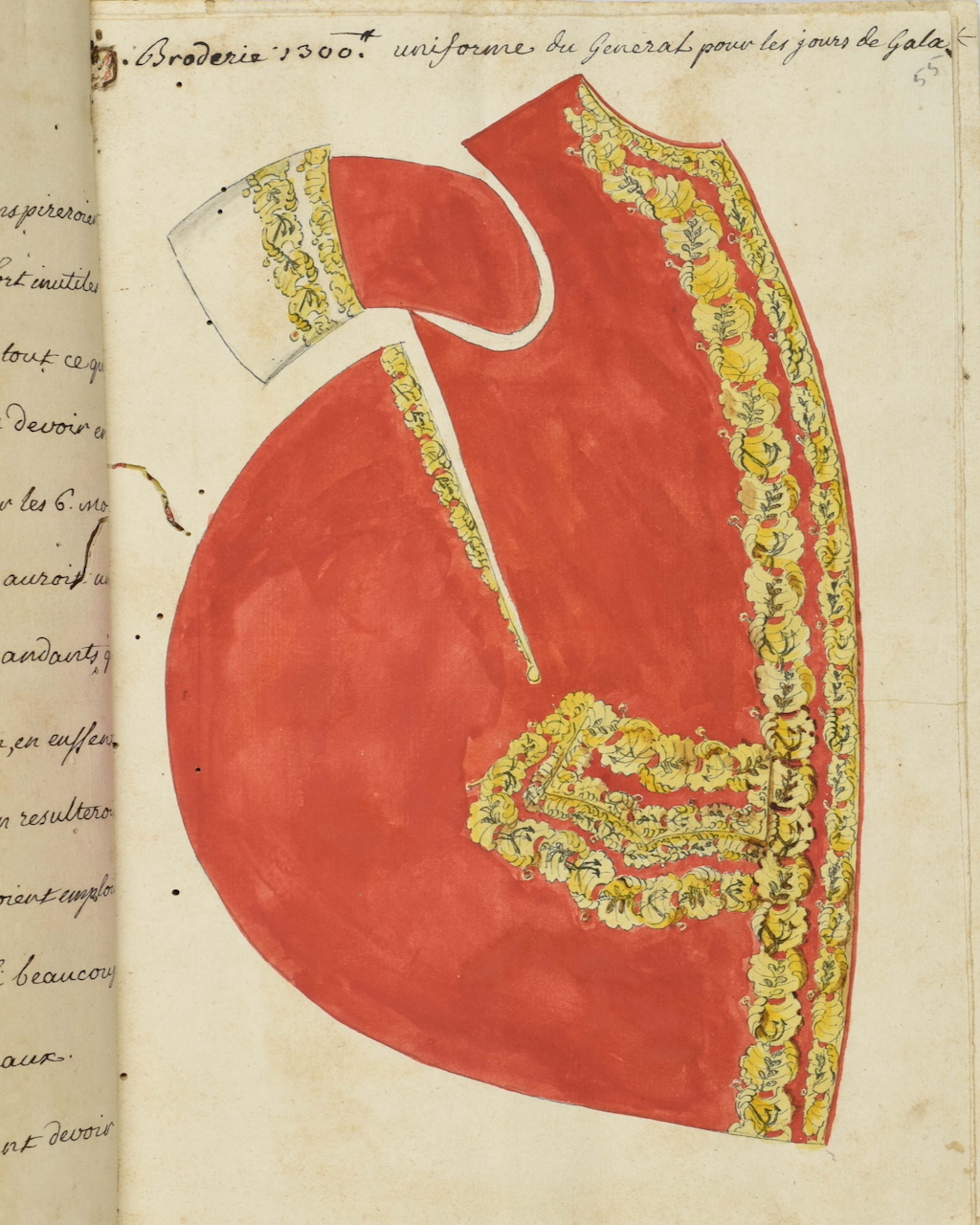
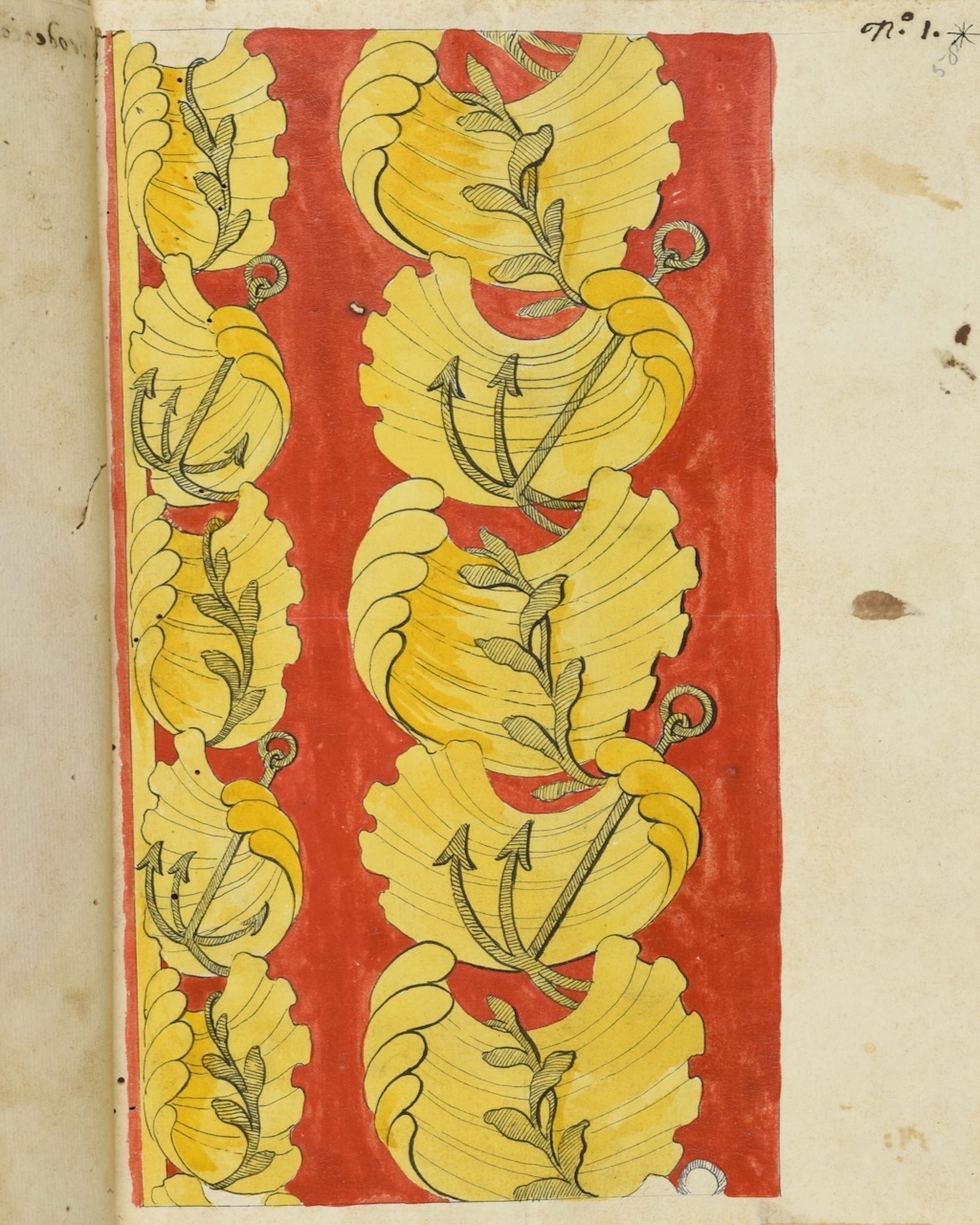
The Order responded favorably Fra Pons-François de Rosset de Fleury’s request and updated the Order’s military uniforms throughout the 18th century. Evidence for the new standards can be found in portrait paintings commissioned by knights of the Order of Saint John and in costume engravings that were popular among collectors and scholars of fashion and culture.
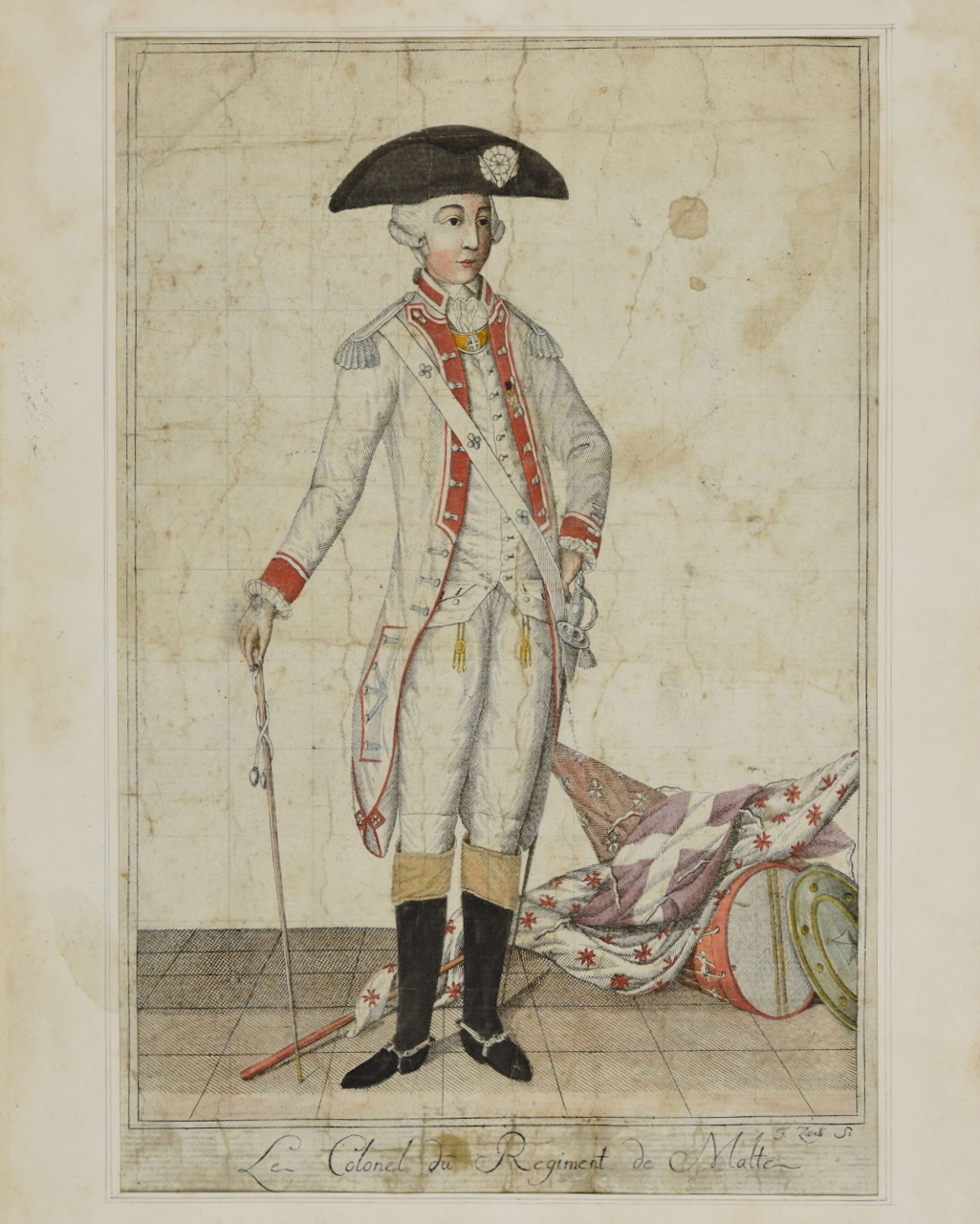
Francesco Zimelli (1748–1803) commissioned a large set of engravings dedicated to costume in Malta, including depictions of the recent uniform updates for navy and army officers of the Order of Saint John. His “Colonel of the Regiment of Malta” shows an elegant noble standing in white court coat with red trim and leggings, holding a staff of command in his right hand while his left hand is poised on his waist above his sword. Flags of the Order of Saint John of Jerusalem and regimental infantry rest on top of a military drum and shield.
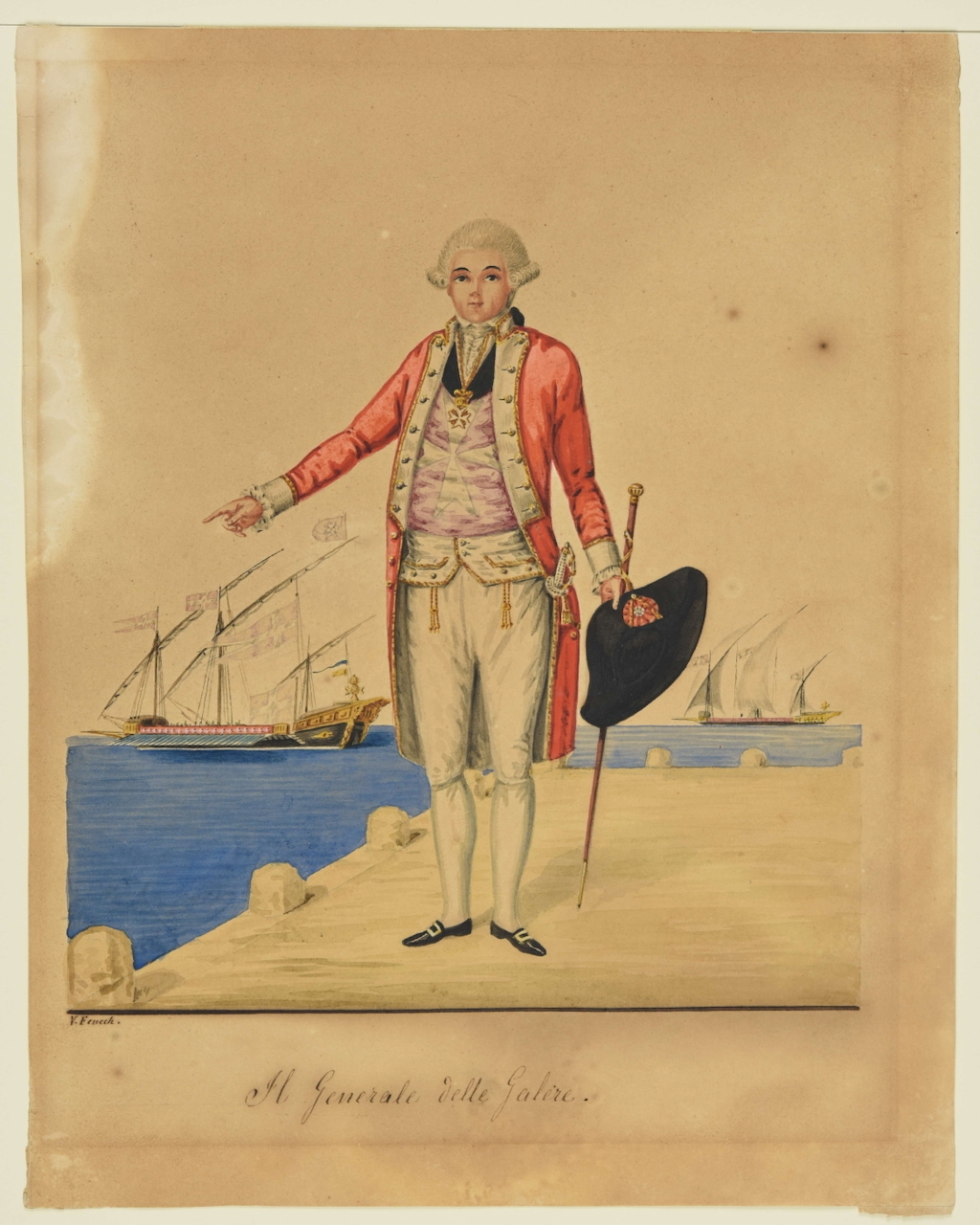
Not to be outdone, Vicenzo Fenech (Zimelli’s contemporary) completed a second series of costume engravings, demonstrating the popularity of these works of art. Fenech’s series likewise included officers of the navy as well as members of the army. His “General of Galleys” stands in full view, holding a bicorn with cockade and a staff of command in his left hand while his right hand points to the harbor and galleys. The general wears a red court coat with white lapels and wig, and a grand cross of the Order of Saint John hangs over his light-red shirt with a Maltese cross denoting his rank and affiliation.
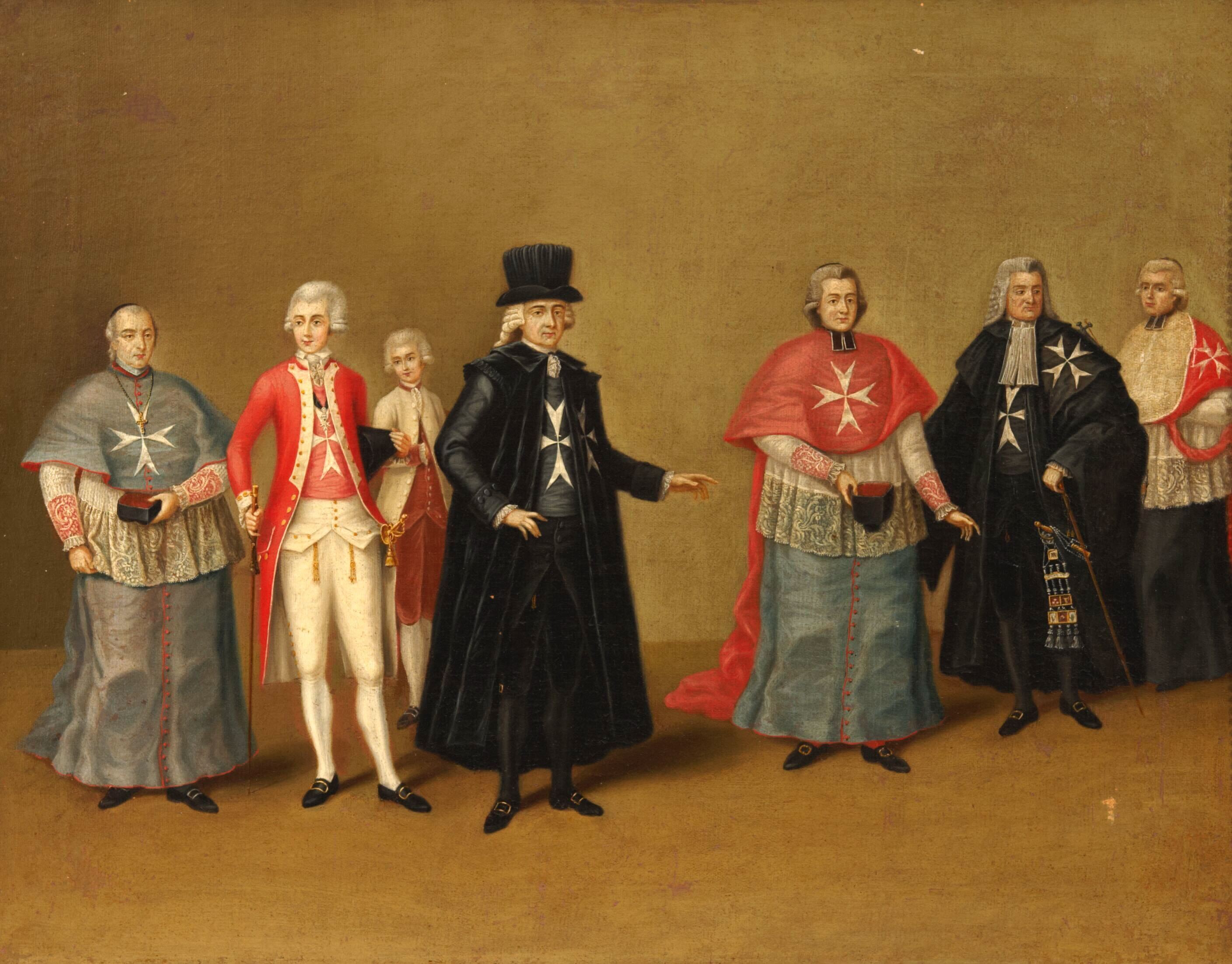
The interest in collecting costume engravings proved popular enough that patrons commissioned composite paintings combining the engraved works into a single work of art. Zimelli’s engravings proved especially popular as source material these composite paintings, as seen in works commissioned in the late 18th century depicting the attire of dignitaries of the Order of Saint John and the Grand Master with dignitaries of the Order, now held in the Museum of the Order of St. John in London.
Both the oil paintings and etchings proved useful for the Order of Saint John. In immediate ways, they could be referenced by high-ranking members of the Order when commissioning clothing or mandating proper dress during formal events and religious ceremonies. And, more largely, they figured into the public understanding of rank and hierarchy—not only for society but for the various members of the Order of Saint John of Jerusalem.