West African Hajj Travelogues
West African Hajj Travelogues
This story is part of an ongoing series of editorials in which HMML curators and catalogers examine how specific themes appear across HMML’s digital collections. From the Islamic collection, Dr. Ali Diakite and Dr. Paul Naylor share a story about Travel.
The Hajj—or the pilgrimage to Mecca, present-day Saudi Arabia—is one of the pillars of the Islamic faith, undertaken at least once during a believer’s lifetime if they are physically able and have the financial means to do so. Hajj takes place between the 9th and 12th of the Islamic month Dhū al-ḥijjah, this year corresponding to May 26–29.
In the following story, Ali Diakite and Paul Naylor, catalogers of West African manuscripts at HMML, share a variety of travelogues documenting this important experience, written by pilgrims from West Africa.
Isḥāq’s Pilgrimage
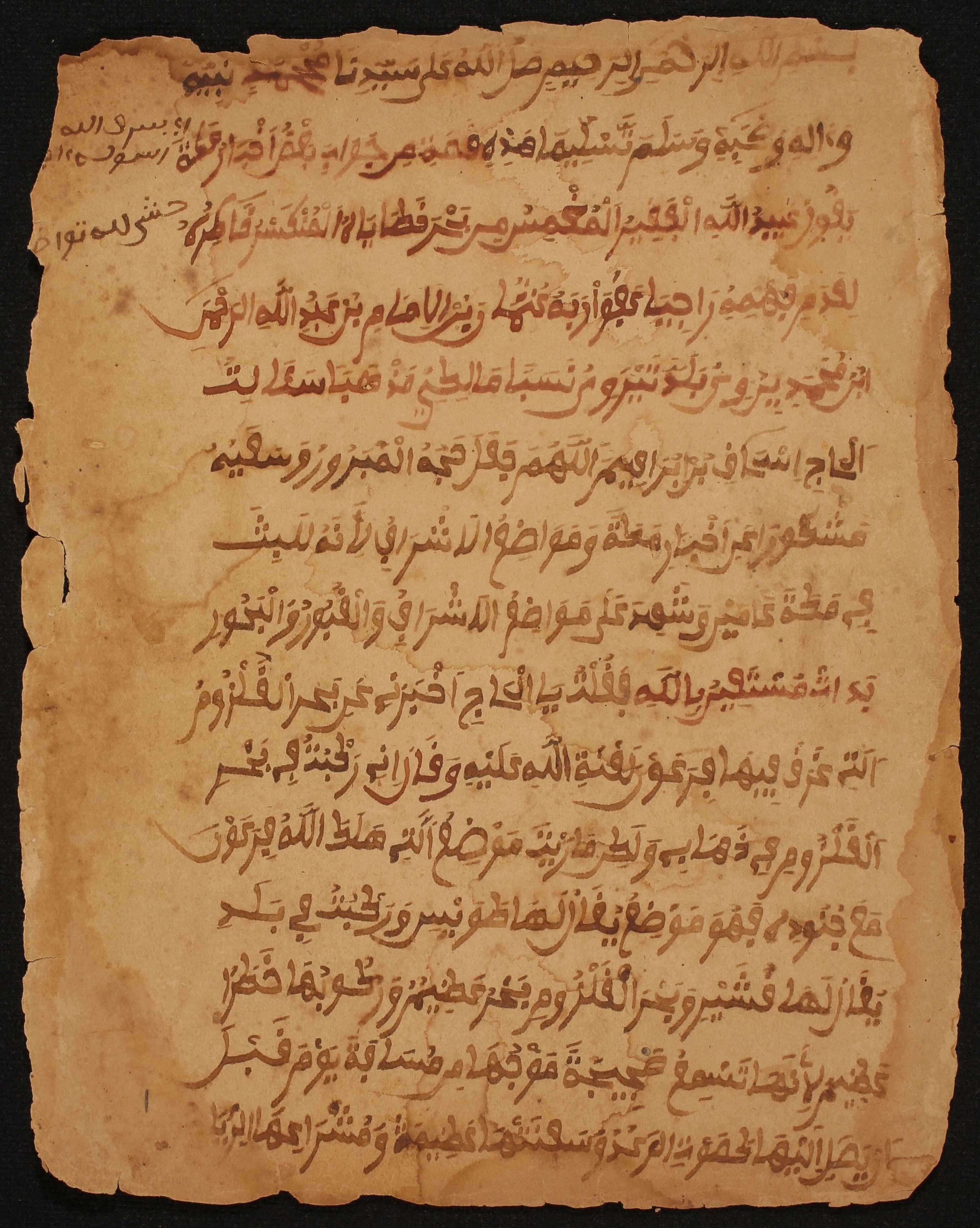
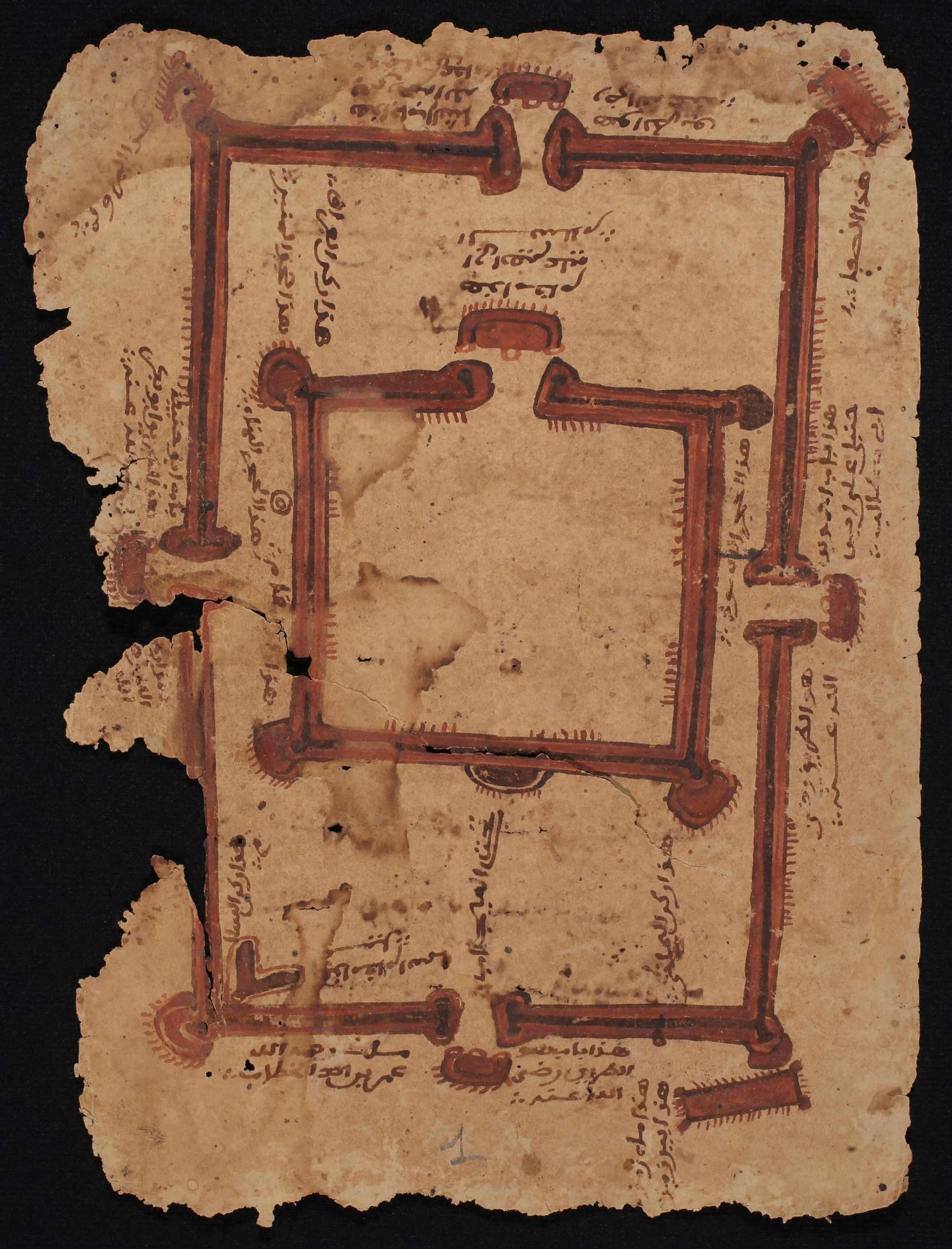
The earliest of the three Hajj travelogues presented here, SAV BMH 10406, dates to between 1839 and 1848 CE. It was composed by ʻUthmān ibn al-Imām al-Tayrawī, who conducted an interview with a returning pilgrim, al-Ḥajj Isḥāq ibn Ibrāḥīm al-Waʻkarī. The document takes the form of a “Q&A,” whereby al-Tayrawī, who was likely the imam (leader) of the local mosque, asks Isḥāq about the two years that he spent in Mecca.
Two years was not an unreasonable amount of time to spend in the endeavor during the early 19th century. Pilgrims would generally allow seven to nine months for the journey to ensure they arrived in time for the Hajj. They may then have stayed six months in Mecca itself, perhaps longer if they intended to study there. Many pilgrims also continued on to Medina and Jerusalem, both cities with enormous significance in the Islamic tradition.
Most of the questions posed to al-Ḥājj Isḥāq concern the visual aspects of his journey. Al-Tayrawī first asks about his impression of crossing the Red Sea (see a different editorial for a view of crossing the Red Sea in the 1640s). Disembarking at Jeddah, al-Ḥājj Isḥāq continues on land to Mecca, where he describes how he entered the house where Prophet Muhammad was born:
No one is able to enter except paying money, but I was able to do so thanks to a rich woman. I had asked to go inside but wasn’t able due to my poverty. However, one day I was sitting outside when a rich lady approached […] she called up to the guardian of the house, who was on the second floor, saying: “Hey you, open the door!” And I immediately heard his footsteps rushing to that place. She gave him money and he opened the door for her and she went inside […] and stayed there a long while, during which time people began to gather around the door. As she left, all the people rushed to enter and we entered with them, pushing each other […] I was able to find the place [where the Prophet was born], prostrating myself and placing my nose on that spot. I had time to make as many supplications to God as I wished, and made my exit by crawling through the legs of the other people crowded there. From that day to twenty days or so afterwards, all around me was the pleasant aroma of the Messenger of God.
—Excerpt from SAV BMH 10406, Mamma Haidara Library, Timbuktu, Mali.
From here, Isḥāq moves on to al-Masjid al-Ḥarām (the Great, or Sacred Mosque) containing the Kaaba—the building said to be constructed by Abraham, which Muslims turn to in prayer—and a wide space around it for circumambulation. Isḥāq describes it as having “seven minarets, each one the height of a date palm.” He describes how he saw the imam ascending a steep pulpit (minbar) to deliver his sermon, and how the vast crowds meant he could barely be heard. He also mentions that the complex had four sanctuaries within it, each representing a madhhab (legal school) of Sunni Islamic law and practice. As he explains, in a passage that helps to date the text:
[…] and the madhhab that is the most followed today is the Hanafi one, because the great Sultan of Istanbul belongs to this madhhab.
—Excerpt from SAV BMH 10406.
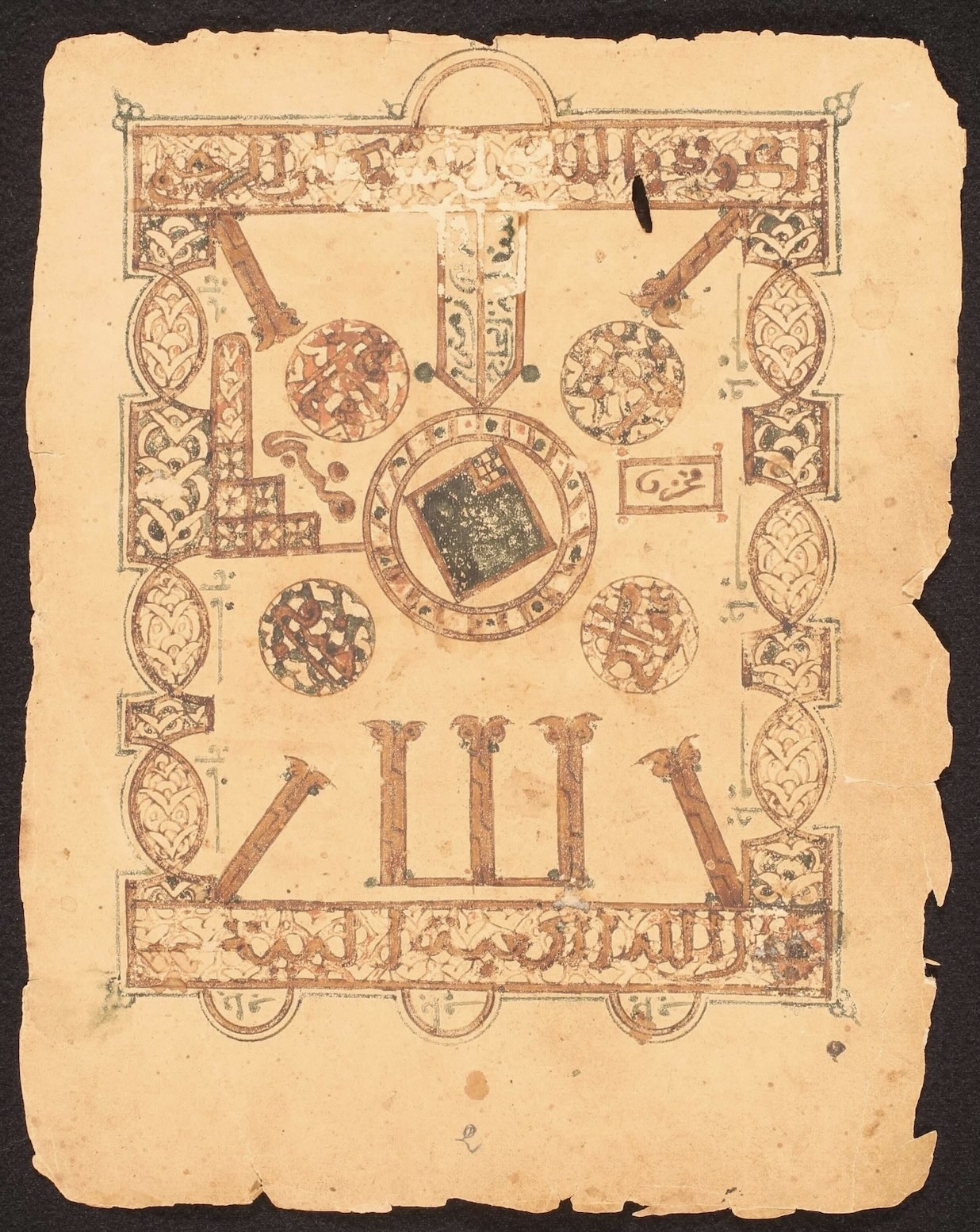
The main day of the Hajj is the 9th of Dḥū al-Ḥijjah, taking place at ʻArafah, the hill where the Prophet Muhammad delivered his final sermon. As Isḥāq explains:
Standing on ʻArafah should take place on the 9th of Dhū al-Ḥijjah from noon until sunset. […] if the pilgrim arrives there while the imam is at the pulpit, then he has performed the Hajj. But if the imam descends before he has arrived then he has missed the Hajj for this year.
—Excerpt from SAV BMH 10406.
During his time in Mecca, Isḥāq witnessed a rare event—rain—and washed himself with the water descending from the Kaaba via a special waterspout (Mīzāb al-Raḥmah). He was admitted inside the Kaaba itself on the morning of ʻĀshūrah—the tenth day of the Islamic month of Muḥarram, exactly one month after the Hajj period had ended. He was also present for the cleaning of the Kaaba six months later, in the Islamic month of Rajab, and even drank some of the water that was used for this purpose! After two years in Mecca he travelled to Medina, staying there for three months until the cleaning of the Prophet’s tomb the following Rajab, and consumed this water as well. On his way back home he stopped in Cairo, visiting al-Azhar and other historical sites. He saw the Governor of Egypt, Muḥammad ʻAlī Bāshā, and made a very curious remark:
He is a learned man, so old that all of his teeth have fallen out. The Christians have manufactured teeth for him and inserted them in his mouth, and he uses them to chew. I saw this with my own eyes.
—Excerpt from SAV BMH 10406.
Isḥāq’s narrative captures many rituals and historical sites that are no longer a part of the Hajj pilgrimage today. Wisely preserved in written form by the imam of his village, his account must have provided readers—many of whom would probably never be able to make the journey themselves—with an opportunity to “glimpse” Mecca as if they had been there.
Muḥammad Ṣanba’s Pilgrimage
The next travelogue, SAV BMH 04478, is firmly dated to 1904 CE. It is an account by the pilgrim Muḥammad ibn Fode Ṣanba of the miraculous things he observed whilst in Mecca. The first of which is that:
The Bayt [i.e., the Kaaba] is never empty of those circling it, from the time of Adam until the blowing of trumpets [a sign of judgement day], whether in the day or night, the summer or the winter, autumn, or spring.
—Excerpt from SAV BMH 04478, Mamma Haidara Library.
Other more fanciful miracles include dogs that don’t bark, wells that never run dry, and sacred pigeons who cannot be cooked by fire. Muḥammad Ṣanba also shares several anecdotes regarding pilgrims who attempted to take various “souvenirs” back with them from their pilgrimage—a fragment of stone from the mosque wall, or a handful of earth, for example—but were not successful:
We heard that one of the pilgrims stole two of the aforementioned pigeons in order to derive blessing from them and show them to the people of his country. This pilgrim placed the birds inside a cage and took them across the salt sea to Suez. But they escaped from him there and returned to Mecca.
—Excerpt from SAV BMH 04478.
In sum, this devotional yet entertaining text encourages pilgrims to treat their surroundings with respect, preserving the experience for others.
Al-Anṣārī’s Pilgrimage
Finally, SAV BMH 11866, which was likely written a few decades after Muḥammad Ṣanba’s account, is by the scholar Muḥammad Ṭāhir ibn Aḥmad al-Anṣārī, who died in 1955 CE. He is known as the author of a commentary on the Mukhtaṣar of ʻAbd al-Raḥmān al-Akhḍarī, one of the most popular compendiums of Maliki law in the region.
Al-Anṣārī went on pilgrimage alongside his wife when he was 64 years old. He explains in the introduction that, not having the financial means to make the journey and approaching old age, he confided in a friend that he was unlikely to make the pilgrimage in his lifetime. The friend convinced him to seek financial aid, first from the government and then from individuals along the way.
Unlike in previous periods, the rise of passenger air travel meant that al-Anṣārī’s journey was, in terms of transport, relatively easy. From his home, likely in the Gao region of Mali, he flew to Niamey (now the capital of Niger), from where he took another flight to Zinder (in southern Niger). From Zinder he drove east, stopping at various locations, until he reached El Obeid, in Sudan. From El Obeid he travelled by train to Sudan’s capital, Khartoum, and finally took a steamship from Khartoum to Jeddah. He followed more or less the same route on his return journey.
While al-Anṣārī briefly describes the things that he and his wife saw during their time away from home, his narrative focuses mainly on the various administrative and bureaucratic issues the couple faced, as well as the donations and hospitality they received from various people. More akin to a diary than a devotional or educational text meant for wider circulation, the document likely served as an aide-mémoire to keep track of his accounts and to properly acknowledge the contributions of those who gave him and his wife assistance.
Three Travelogues
It is fascinating to see what different approaches these three authors took in recording their experiences of the same religious obligation. They capture the changes of route, forms of transport, geopolitics and the experience of the Hajj itself over the passing years. Today, the Hajj remains both a universal Muslim experience while being unique to individual pilgrims in myriad ways, excitedly shared with others upon their return home.